TL;DR: A sewer line camera inspection sends a live-feed camera through your drain line to identify blockages, root intrusion, pipe cracks, and grading issues before they become expensive failures. For Kelowna homeowners, especially in older neighbourhoods with mature trees, it’s the single most effective way to know the real condition of your sewer line. Roto-Rooter Kelowna offers sewer line inspections with same-day booking. Call 778-760-3792.
Your sewer line does one of the most important jobs in your home quietly and invisibly, until something goes wrong. A sewer line camera inspection is how you find out what’s happening in there before the problem makes itself obvious in a more expensive way.
What is a sewer line camera inspection?
A sewer line camera inspection uses a flexible cable with a waterproof, high-resolution camera on the end. It’s fed through a cleanout access point or drain opening and navigated through the pipe while transmitting live video. A trained plumber watches the feed, identifies any problems, and in most cases marks the exact location of issues on a locator above ground.
The whole process for a standard residential main line takes 30 to 60 minutes. The homeowner can watch the feed in real time and leave with a clear picture, literally, of what’s in their line.
What can a sewer line inspection find?
Camera inspections reveal what no other method can detect without excavating:
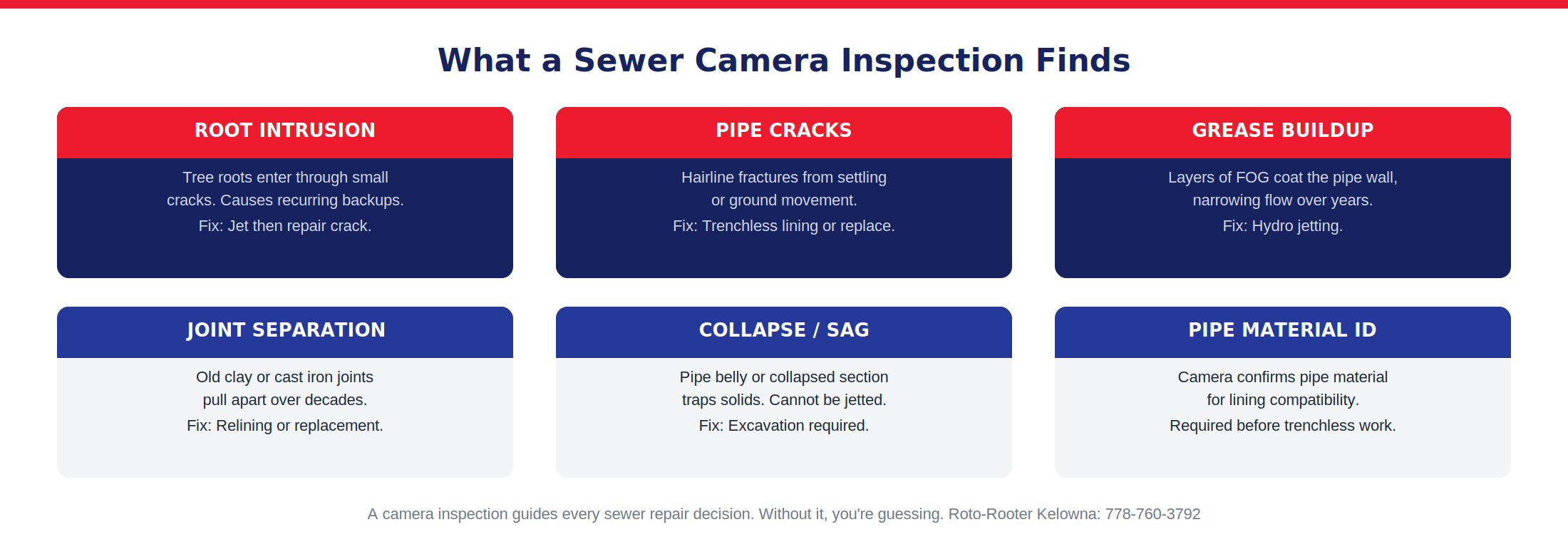
A camera inspection guides every sewer repair decision.
Root intrusion: Tree roots follow moisture and can enter sewer lines through joint gaps or small cracks. They grow slowly at first, then aggressively once established. An inspection shows root presence before it becomes a full blockage.
Grease and scale build-up: Gradual accumulation on pipe walls that narrows the effective diameter of the line. Common in kitchen drain lines and in older lines that haven’t been cleaned in years.
Cracks and fractures: Especially common in clay or older concrete pipes, which degrade over decades. A crack can allow soil infiltration (called “root-induced cracking”) or cause the pipe to partially collapse.
Misalignment or “belly” in the line: A low section of the pipe where solids accumulate and don’t fully flush, often caused by soil settling or poor original installation.
Joint failures: Separated or offset joints that allow roots in and let sewage out into the surrounding soil.
Each of these problems has a different fix, and knowing which one you have before digging means the right repair the first time.
When should a Kelowna homeowner get a sewer line inspection?
Before buying a home. A pre-purchase sewer inspection is one of the most valuable things a buyer can request in the Okanagan, where a significant proportion of the housing stock dates from the 1970s through the 1990s. A failed sewer line discovered after closing is a $5,000–$15,000 problem. A pre-purchase inspection costs a fraction of that.
When drains are slow or recurring. If you’ve had multiple drain clears over the past few years and the problem keeps coming back, a camera inspection identifies the underlying cause that a snake alone can’t fix.
After a sewage backup. Once the immediate problem is cleared, a camera inspection confirms whether the main line is structurally sound or whether a larger issue was behind the backup.
Every five to seven years for homes in established Kelowna neighbourhoods with mature trees, older clay or concrete sewer lines, or a known history of drain issues. Think of it as the equivalent of a home maintenance inspection for the part of your home you can’t see.
If you have Poly B pipe. Homes built in the Poly B era (1978–1995) often have sewer lines of similar age. An inspection of both systems at the same time gives a complete picture of the underground plumbing.
How much does a sewer line inspection cost in Kelowna?
A sewer line camera inspection in the Kelowna area typically costs $150–$350 for a residential main line, depending on the line length and access conditions. At Roto-Rooter Kelowna, the quoted price is the price you pay, no additions after the camera is in.
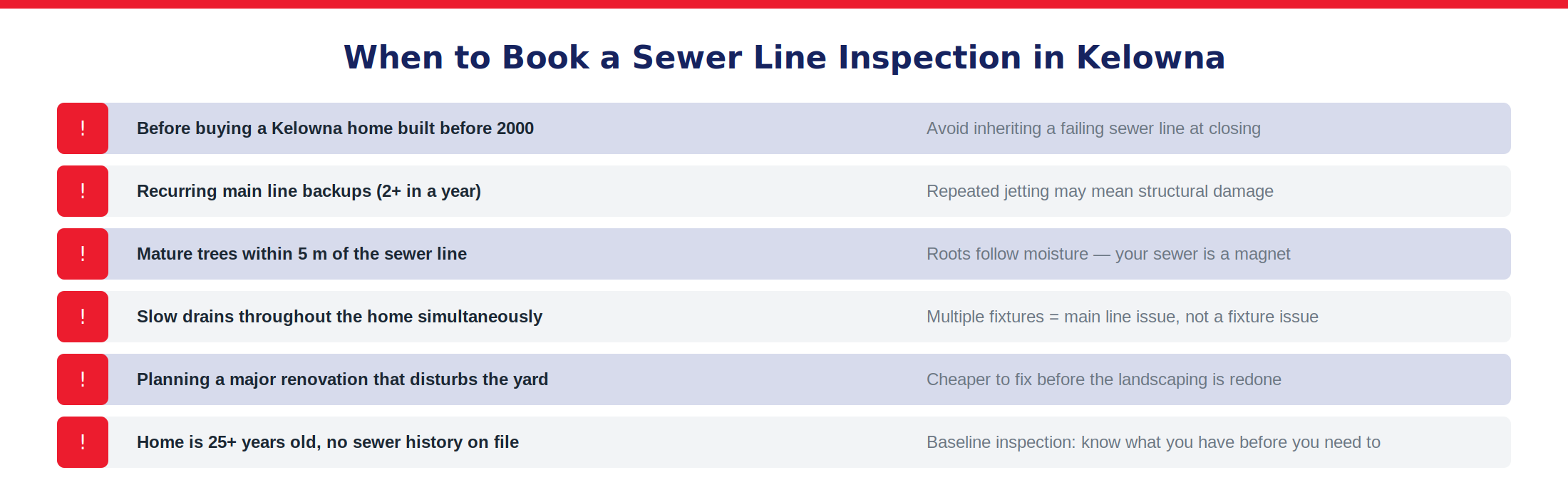
Baseline sewer inspection: know what you have before you need to.
If the inspection identifies a problem, the repair cost depends on what’s found. Root intrusion cleared with professional drain cleaning is significantly less expensive than a collapsed section requiring excavation. Knowing which situation you have before digging is exactly why inspections save money.
What happens after the inspection?
You receive a clear report of what the camera found. If everything is clean and properly graded, you have peace of mind and a baseline for future comparisons. If issues are found, the plumber explains the options:
- Professional drain cleaning to clear grease or root build-up
- Mechanical root cutting for established root intrusion
- Trenchless pipe lining (CIPP, cured-in-place pipe) for cracks or joint failures, which repairs the pipe from the inside without digging
- Targeted excavation for collapsed sections that require physical replacement
Roto-Rooter Kelowna handles all of these in-house, including trenchless sewer repair, so you’re not getting an inspection referral and then having to find another contractor.
Frequently asked questions
Does a sewer line inspection cause any damage to the pipe? No. The camera cable is flexible and follows the existing pipe, there’s no cutting or pressure involved. It’s a completely non-invasive diagnostic.
Do I need a sewer inspection if my drains seem fine? “Seems fine” is exactly when an inspection is useful, particularly for older homes. Many sewer line problems are progressing slowly and won’t become obvious until a backup or partial collapse occurs. An inspection on a functioning system catches problems while they’re still inexpensive to fix.
Can a camera inspection find all problems with my sewer line? Camera inspection finds structural and debris-related issues with high accuracy. It cannot test for full pipe integrity the way pressure testing does, and very small hairline cracks may not be visible on camera. For most residential diagnostic purposes, a camera inspection provides comprehensive information.
How long does a sewer camera inspection take? Typically 30 to 60 minutes for a standard residential main line, from setup to report. Lines with complex routing or significant blockages may take longer.
What’s the difference between a camera inspection and a drain cleaning? Camera inspection is diagnostic, it shows what’s in the pipe. Drain cleaning removes it. Many plumbers, including Roto-Rooter Kelowna, combine both: inspect first to understand the problem, clean to fix it, then inspect again to confirm the line is clear.
Know what you’re dealing with before the backup does
A sewer line inspection is not a luxury, it’s the only way to know the real condition of the pipe that handles everything leaving your home. For Kelowna homeowners in older neighbourhoods, or anyone considering buying a home in the Okanagan, it’s one of the most useful calls you can make.
Call Roto-Rooter Kelowna at 778-760-3792 for a sewer line inspection. Same-day booking available. Visit rotorooter.ca.